






)


Key Takeaways
- Thai massage combines assisted stretching, acupressure, and rhythmic compression to deliver a full-body, movement-based therapy.
- Rooted in traditional Thai medicine, the practice works along Sen lines to improve energy flow, balance, and overall wellbeing.
- Techniques such as guided stretching and bodyweight pressure enhance flexibility, joint mobility, and muscle length without active effort.
- Regular Thai massage may reduce muscle tension, improve posture, boost circulation, and support stress reduction and mental clarity.
- Modern massage chairs can mimic elements like compression and movement patterns, offering convenient support between professional sessions.
Thai massage doesn’t ask you to lie still and drift off. Instead, it invites your body to move, stretch, and reset. Rooted in ancient Thai medicine and influenced by yoga and Ayurvedic traditions, Thai massage is often described as “lazy yoga”; not because it’s passive, but because the therapist guides your body through stretches you might not reach on your own.
Unlike many Western massage styles that focus primarily on muscle relaxation, Thai massage works on the entire body. Through assisted stretching, acupressure, and full-body mobilisation, it aims to restore flexibility, improve energy flow, and leave you feeling both grounded and recharged. It’s restorative, but it’s also quietly energising.
What Is Thai Massage?
Traditional Thai massage is a therapeutic practice that dates back more than 2,500 years. It’s believed to have been developed by Jivaka Kumar Bhaccha, a physician associated with the Buddha, and is deeply intertwined with traditional Thai medicine.
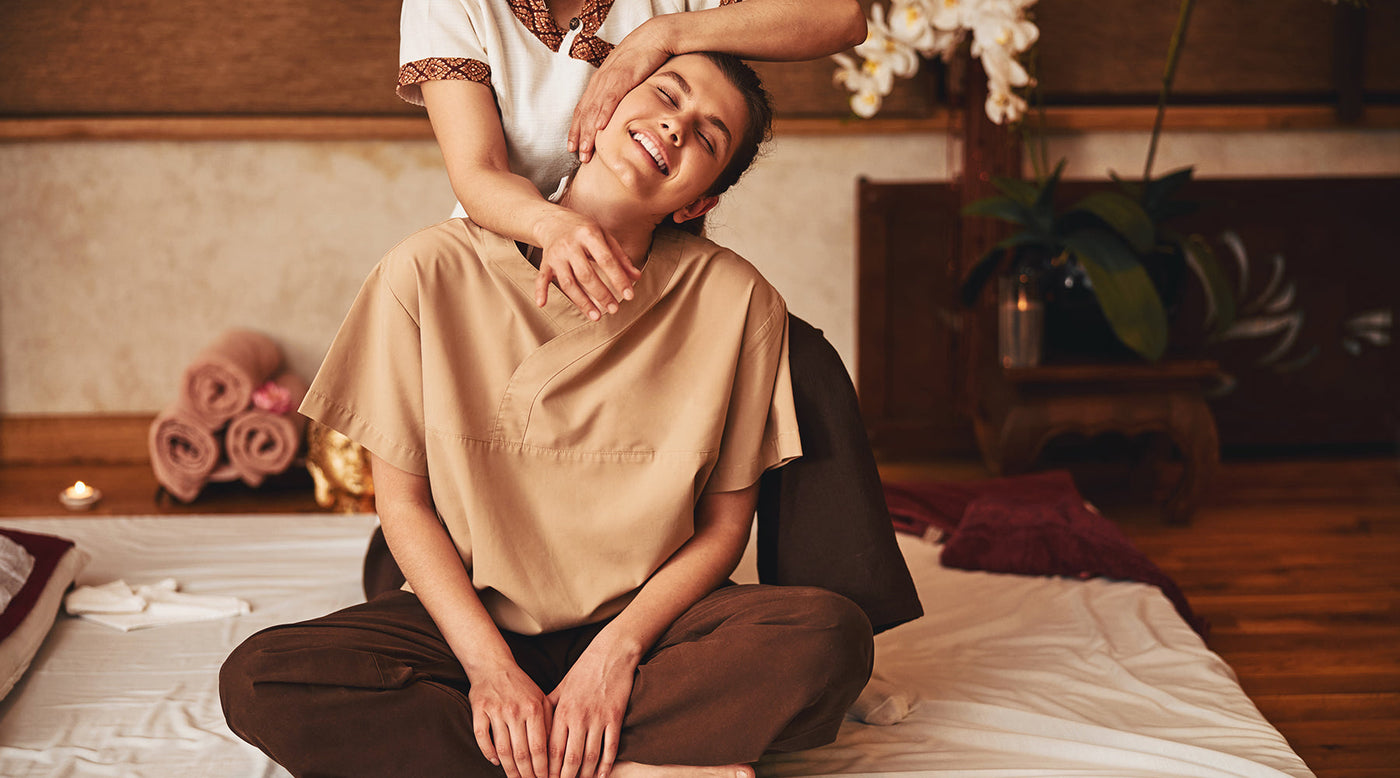
So, what is Thai massage in practical terms? Sessions are typically performed on a padded mat on the floor, with the client fully clothed in comfortable attire. Oils are rarely used. Instead, the therapist applies rhythmic pressure and guided stretches using their hands, elbows, knees, and even feet.
The philosophy behind Thai massage centres on the concept of energy flow through the body. Practitioners work along pathways known as Sen lines, aiming to release blockages, improve physical balance, and support overall wellbeing. The result is a treatment that feels active, expansive, and deeply restorative.
Thai Massage Techniques Explained
Thai massage techniques work together to create a dynamic, full-body therapy rather than a localised muscle treatment. Key elements include:
Assisted stretching
The therapist gently guides your body into yoga-like stretches, helping improve flexibility, joint mobility, and muscle length without you needing to exert effort.
Acupressure
Firm, sustained pressure is applied along Sen lines to release tension, encourage energy flow, and reduce muscular tightness.
Rhythmic compression
Rocking and pulsing movements help relax the nervous system, stimulate circulation, and prepare the body for deeper stretches.
Bodyweight leverage
Rather than relying solely on strength, therapists use their bodyweight through hands, elbows, knees, and feet to apply controlled, even pressure.
Together, these techniques create a treatment that feels both structured and fluid: stretching, compressing, and mobilising the body as a whole.
Benefits of Thai Massage
Thai massage benefits go beyond short-term relaxation. Regular sessions may support:
-
Increased flexibility and range of motion, particularly in the hips, spine, and shoulders
-
Reduced muscle tension and stiffness, especially for sedentary or physically active individuals
-
Improved posture and spinal alignment through joint mobilisation and balanced muscle engagement
-
Enhanced circulation and energy levels, supporting tissue health and recovery
-
Stress reduction and mental clarity, thanks to rhythmic movement and nervous system regulation
Can You Experience Thai Massage Benefits at Home?
While nothing fully replaces the skill of a trained massage therapist, modern massage chairs can replicate thebenefits of Thai massage. Advanced chairs use layers of AirSpa® cushions and Flexi-Track® rail technology to stimulate stretching sensations, rhythmic compression, and full-body pressure patterns.
Some models mimic movements inspired by Thai massage techniques. While they don’t offer assisted stretching in the traditional sense, models like theTheraMax® andRemedial Deluxe+® can provide consistent, convenient support for muscle relaxation and circulation at home, especially between professional sessions.
How Often Should You Get a Thai Massage?
Frequency depends on your lifestyle, activity level, and goals. For those focused on flexibility, posture, or physical performance, weekly sessions can help maintain mobility and prevent stiffness. For general wellbeing and stress management, fortnightly or monthly sessions may be sufficient.
Beginners should start gently. Thai massage can feel intense at first, so listening to your body and communicating with your therapist is essential. Over time, most people find their body adapts, and the stretches feel increasingly beneficial rather than challenging.
Integrating Thai Massage into a Wellness Routine
Thai massage works best as part of a broader wellness approach. It complements practices such as yoga, regular stretching, physiotherapy, and strength training by supporting joint mobility and muscle balance.
Used preventively, Thai massage can help maintain long-term flexibility, support posture, and reduce the likelihood of chronic stiffness. Rather than waiting for pain to appear, incorporating Thai massage into your routine encourages your body to move well.
Frequently Asked Questions About Thai Massage
Is Thai massage suitable for beginners?
Yes, though it’s important to let the therapist know you’re new. Techniques and stretches can be modified to suit comfort and flexibility levels.
Can massage chairs replicate Thai massage techniques?
They can mimic elements such as compression, rhythmic movement, and spinal mobilisation, but they don’t fully replace hands-on assisted stretching.
How often should I get a Thai massage?
This depends on your needs. Weekly sessions suit active lifestyles, while fortnightly or monthly visits support general wellbeing.
Summarise Article
Summarise Article

