




)


Key Takeaways
- A massage chair is an upfront investment, while regular appointments are an ongoing expense. A chair ranges from $5,995 to $22,995 as a one-time cost, whereas regular massage appointments can feel more affordable because the spend is spread out over time. However, weekly sessions can still add up to $15,600 over three years. Ultimately, which option gives you better value comes down to how often you’ll use it.
- The two options solve different problems. A chair wins on access and repeatability with no booking, no travel and no per-use cost, and it can be shared across the household. A therapist wins on hands-on, adaptive care for pain, injury or a specific concern.
- It doesn't have to be either/or. Many people use a chair for everyday relief at home and still book a therapist when they want focused, hands-on attention.
For many of us, massage needs very little selling. We know the relief, the long exhale and the welcome return of our patience; the only real question is how to fit more of it into daily life. Does regular massage make more sense as an appointment you keep booking, or the convenience of a chair waiting at home?
When weighing up a massage chair vs real massage, both options offer relaxation and pain relief. The difference lies in how you access them, what you pay over time and how often you want to enjoy a massage.
Is it an occasional hour set with a skilled therapist, gentle music, and nowhere else to be? Or is it a nightly post-work ritual at home, ready at short notice or even shared across the household?
Massage Chair vs. Real Massage: What's the Difference?
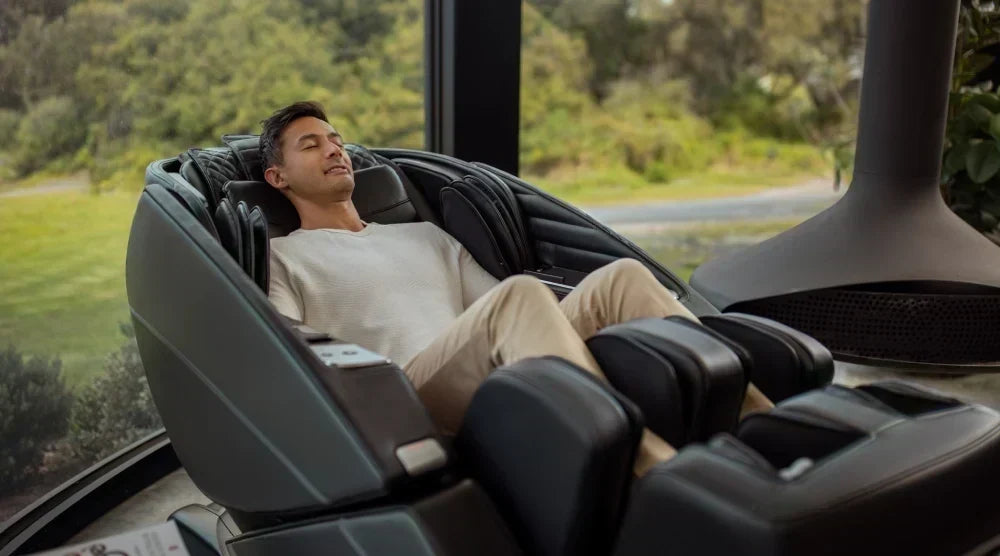
A massage chair provides on-demand massage at home, using the latest AI technology that mimics the ‘hands’ of a real masseuse, full-body AirSpa® and customisable massage treatments. Depending on the model, it will target the neck, shoulders, back, hips, glutes, legs and feet, or work the entire body, with adjustable settings for intensity, position and massage style.
A professional massage is delivered in-person by a trained therapist. They can respond to what they feel, adjust their technique and pressure as they work and give attention to areas that need it.
Neither option is universally better. The better fit depends on whether you want a massage readily available at home or less frequently.
Upfront Cost vs. Ongoing Expense
A massage chair may ask more of your budget at the beginning, while a professional massage therapist spreads the cost across individual treatments. One feels like a long-term investment in your health; the other feels like a regular expense.
The Cost of Buying a Massage Chair
Massage chair prices vary with the massage technology, quality and features of the chair. Entry-level models at Masseuse Massage Chairs start from around $5,995 with the Health+®, to $22,995 for the flagship TheraMax®. As the price rises, so does the technology: premium chairs add features like Advanced Dual-Pro® 4D technology, AI IntelliScan and Health Detection, Full-body AirSpa® massage, Hot Stone Therapy, Reflexology Rollers and a wider choice of customisable massage treatments.
Masseuse Massage Chairs offer a broad range of models, so it's worth comparing what each chair does rather than looking at the price alone.
The Cost of Regular Massage Appointments
With a professional masseuse, you typically pay one appointment at a time. The bigger picture depends on how often you visit. Prices change according to where you live, the type of massage, the therapist and how long you stay on the table. Most 60-minute sessions in Australia sit between $60 and $120, so, as a rough guide, we have used $100 to keep the maths simple and give you an idea about the cost of regular in-person massage over time.
| Frequency | One year | Three years | Five years |
|---|---|---|---|
| Monthly | $1,200 | $3,600 | $6,000 |
| Fortnightly | $2,600 | $7,800 | $13,000 |
| Weekly | $5,200 | $15,600 | $26,000 |
Comparing the Benefits
Costs tell you what each option asks of your wallet. The benefits tell you what you are getting in return.
Benefits of a Massage Chair
The most obvious advantage of a massage chair is easy to access whenever you need it. There is no appointment to book, no travel time and no extra payment each time you use it. You can sit down after exercise, or whenever the inbox is full, the commute is long, and your body needs a moment to reset.
Depending on the model, a full-body massage chair may combine the latest massage roller technology, full-body AirSpa® massage, AI IntelliScan and Health Detection, Hot Stone Therapy, Reflexology Rollers and automatic massage treatments to help ease muscle tension and support relaxation at home. Chairs with Advanced Dual-Pro® 4D technology simultaneously massage your upper and lower body for a truly therapeutic-grade experience.
Then there is the household factor. One chair can become part of several people’s wellness routine, with everyone choosing the treatments that suit their personal needs.
Benefits of a Professional Massage
A professional massage therapist brings trained hands, informed judgement and the ability to change course as they work. They can adjust pressure, spend longer on one area and respond to the intricacies of how your body feels that day.
There is something to be said for the ritual of it too. You leave the house, put your phone away and hand over the next hour to someone else. For targeted hands-on work, a specific concern or an uninterrupted hour devoted to switching off, that can be hard to beat.
A massage chair is a practical option for regular relief and relaxation at home. A therapist still plays an important role when pain, injury or other health concerns need attention.
Which Option Is Better for Different Lifestyles?
Before you come to your verdict on massage chair vs real massage, you don’t have to choose one and banish the other. Plenty of people use a massage chair regularly at home, then book a therapist when they want more hands-on attention.
| Lifestyle | Why a chair suits | When to still see a massage therapist |
|---|---|---|
| Busy professionals | A massage chair makes it easy to relieve aches and pain after work, without finding an appointment time, travelling across town or adding another commitment to the calendar. It can be particularly welcome after long hours at a desk. | A therapist may be the better choice when you want focused, hands-on attention, closely adjusted pressure or specific areas given more attention. |
| Active individuals | Regular access at home can support your post-exercise relaxation and recovery routine after training, long walks or weekends spent doing more than your body bargained for. | Targeted hands-on work can be useful when one area needs closer attention or you need guidance from a trained professional. |
| Older adults and daily relaxation seekers | A chair offers pain relief, privacy and easy access at home, with treatments that can be adjusted to suit your body and available time. | Anyone managing pain, a health condition or mobility concerns should seek professional advice before using a massage chair. |
Is a Massage Chair Worth It for You?
A massage chair is more likely to be worth the investment if you plan to use it several times a week and want a massage available at home. The upfront cost is higher, but flexible, interest-free payment plans through our finance provider, humm, make it easier to spread that cost. Regular use adds value to the investment over time.
It may make less sense if massage is an occasional treat, space is limited, or what you really want is hands-on work from a trained therapist. A chair can support everyday relaxation and muscle relief, but it’s not a substitute for professional advice when pain, injury and health concerns are involved.
Ultimately, the value in the massage chair vs real massage debate is personal. What would make your body happiest? It will also depend on your budget, how often you want massage to be part of your life, whether the household will share in the benefits and which model suits your needs. The Masseuse Massage Chairs buying guide can help you compare massage chairs online, or drop into one of the many showrooms to try one of our massage chairs in person.
Summarise Article
Summarise Article

